A new habit, bought by people who haven’t tried it yet.
Most Go Gember customers buy their first bottle without ever having tasted pure ginger juice. That makes the product page do a lot of work. The deal is strong (5+3 free, eight gifts, a money-back guarantee) but a discount doesn’t answer the questions people have before they commit to a daily shot:
- Is it too spicy for me?
- How do I make ginger tea with a shot?
- How long does an opened bottle stay good?
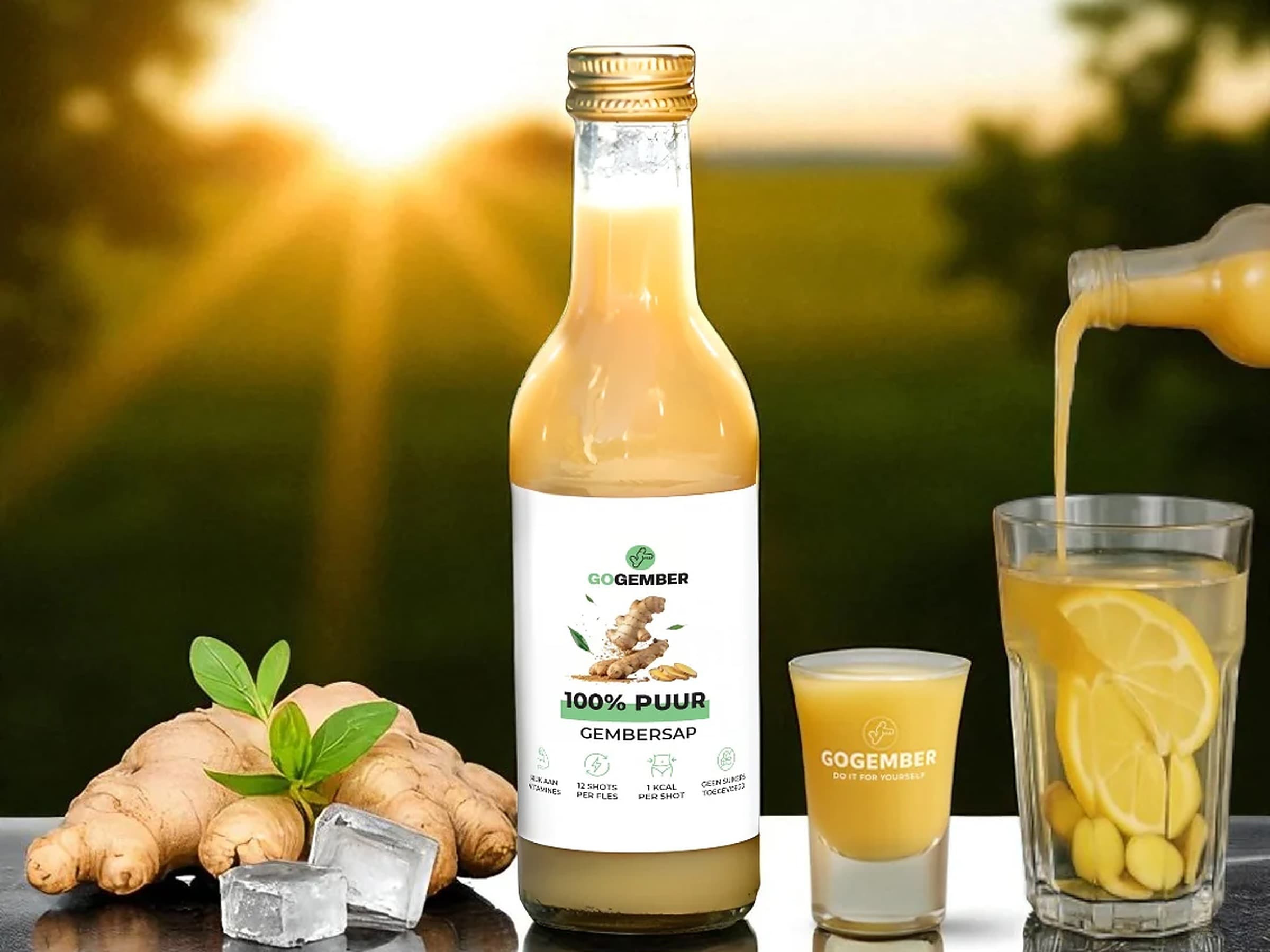
- How many shots do I get from one bottle?
- How do I drink it so it tastes best?
- Do you ship to Germany?
The answers existed, spread across FAQ tabs further down a long page. Shoppers in the middle of a decision don’t scroll to the FAQ. They leave.
One tap from doubt to answer, and the page remembers.
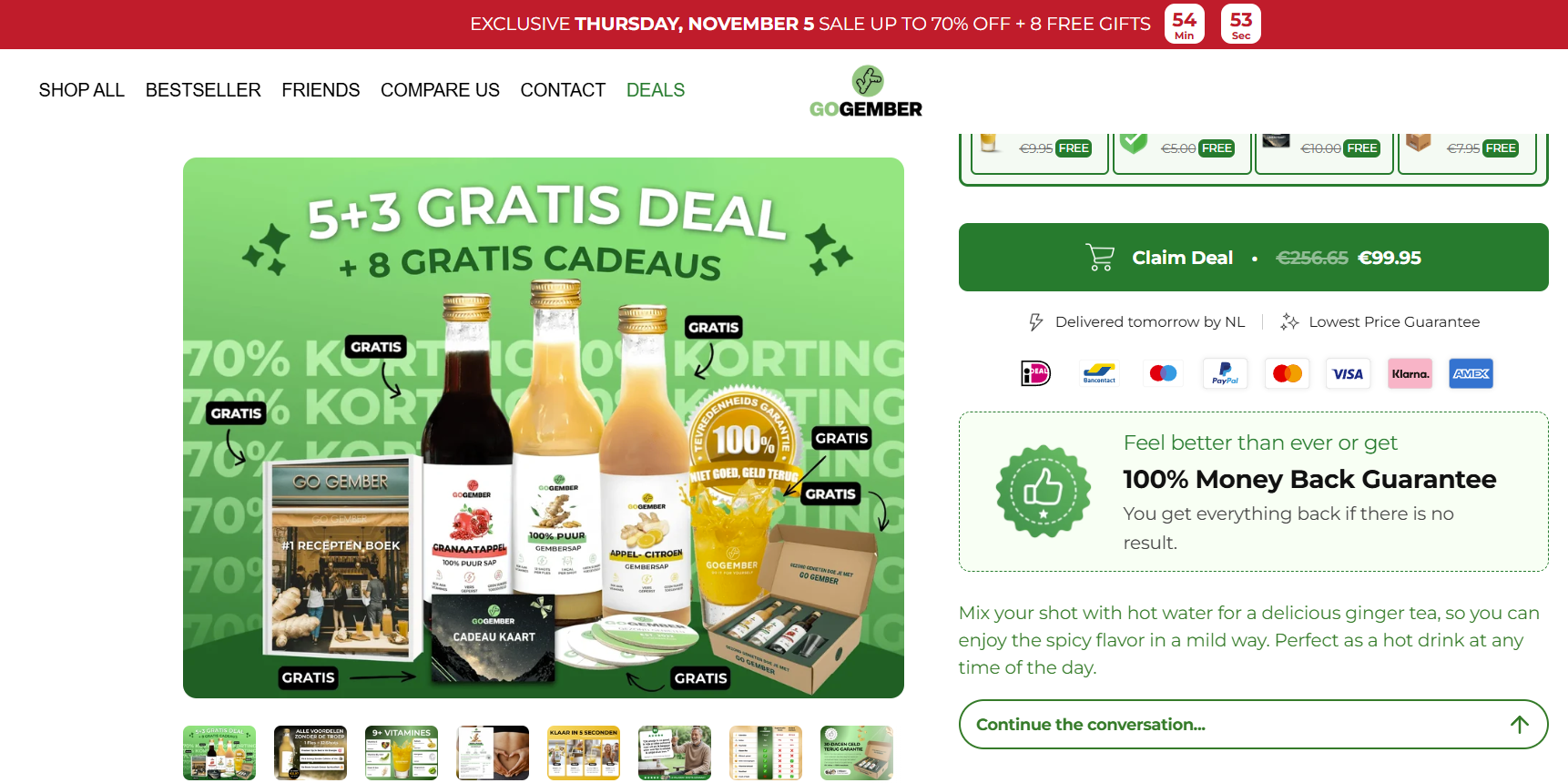
So Go Gember put Twini directly under the buy box. Suggested questions sit below the “Claim Deal” button, picked for the product on the page: “How do I make ginger tea with a shot?”, “How long does an opened bottle stay good?”, and in Dutch “Wat als ik het niet lekker vind?” (what if I don’t like the taste).
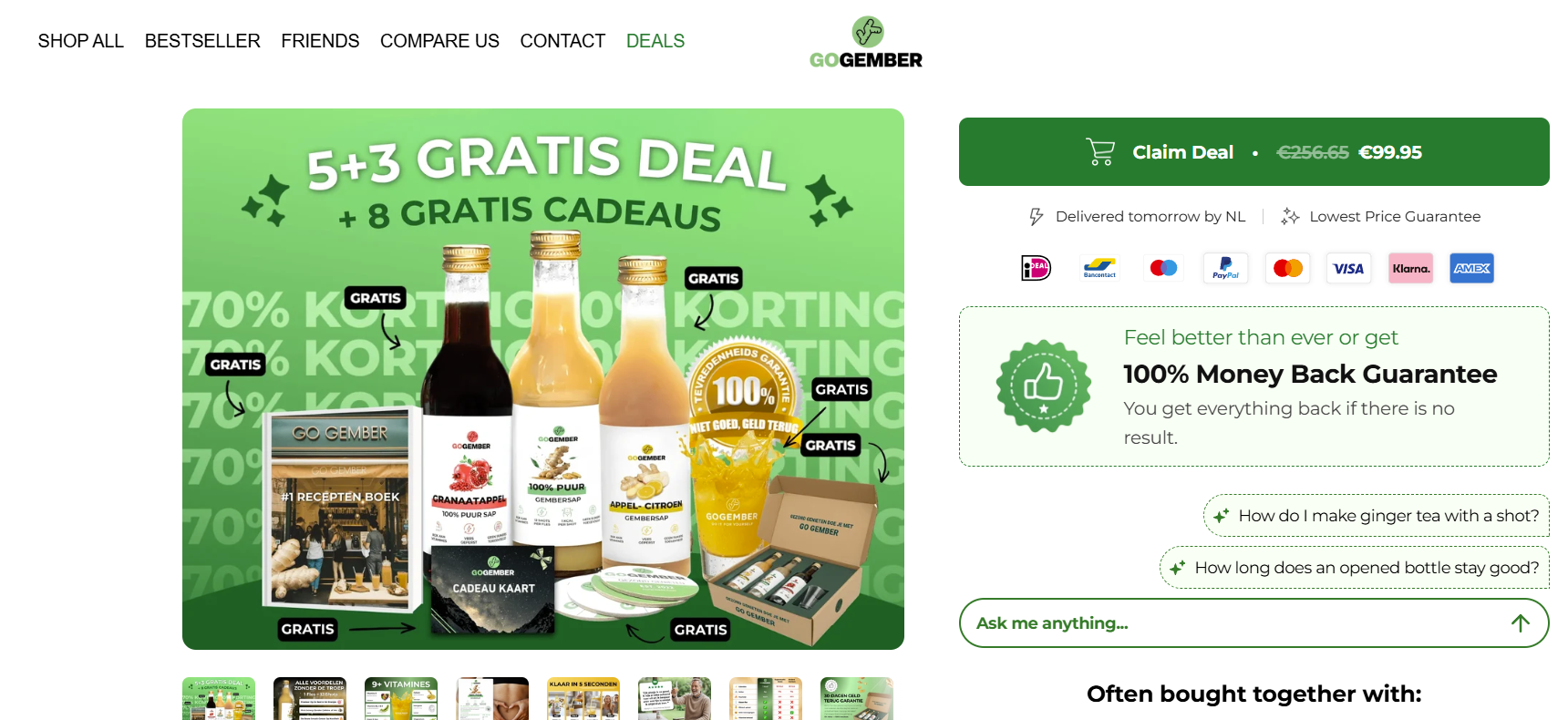
Tap one and the chat opens beside the page, with the product and its bundle options at the top. Ask how long a bottle lasts and Twini answers in full: unopened, it keeps for a long time thanks to cold pressing and hygienic bottling in glass (check the date on the cap); once opened, keep it in the fridge and finish it within about three weeks; one bottle gives 12 shots.
Then comes the part shoppers don’t expect. When they close the chat, the product page doesn’t go back to how it was. Under the buy box, Twini leaves a short line written from what they just asked. After a question about ginger tea, it reads: “Mix your shot with hot water for a delicious ginger tea, so you can enjoy the spicy flavor in a mild way.” The suggested questions make way for “Continue the conversation”. Each shopper sees a page that has already answered their doubt.
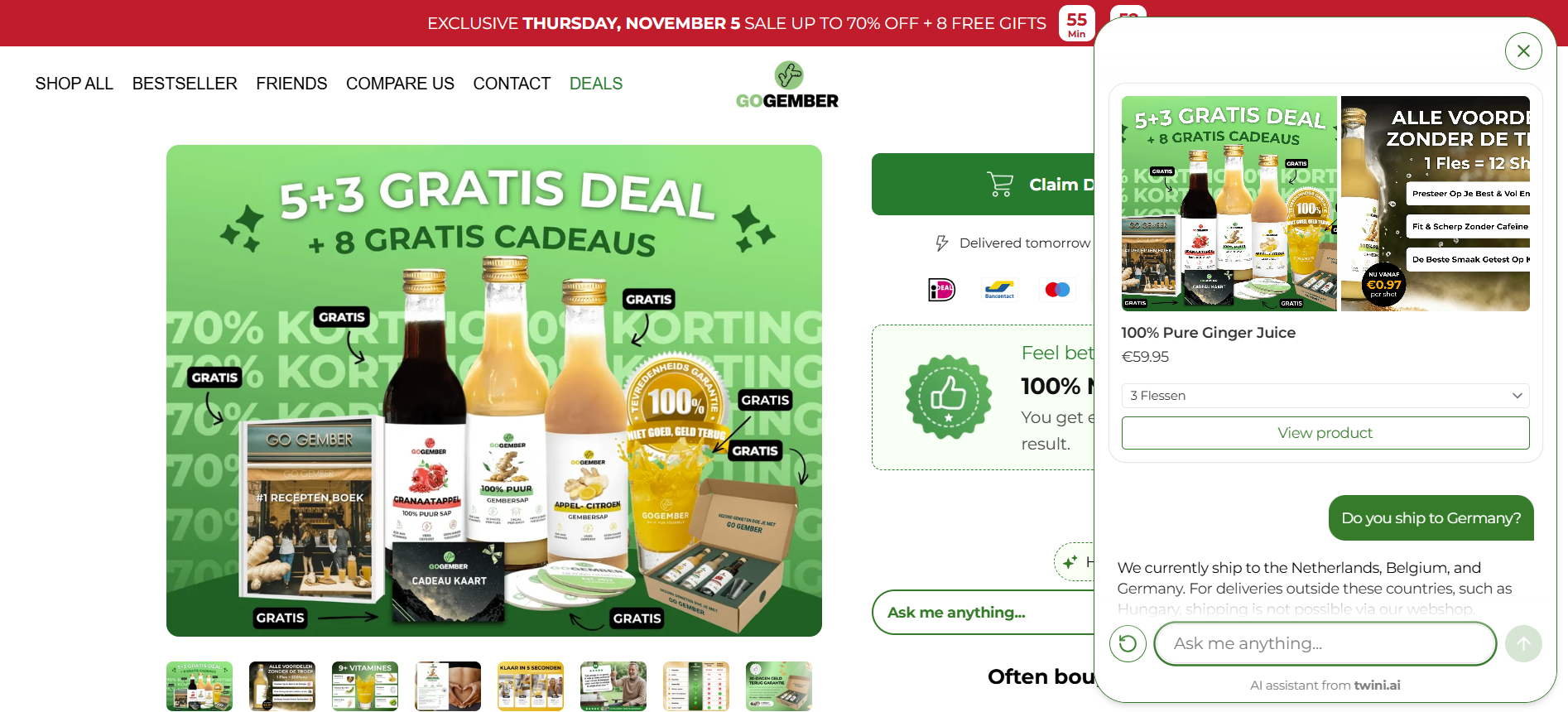
Shoppers can also type their own question. One asks “do you ship to Germany?” and gets a straight answer (the Netherlands, Belgium and Germany), with the right product and bundle shown in the chat.
Ten percent more buyers, measured against a control.
Go Gember ran a controlled A/B test in Intelligems on its product pages. Half the visitors saw the store without Twini, half saw it with Twini. Everyone counted, including visitors who never tapped a question. Against the control group:
- Conversion rate: +9.99%, from 5.50% to 6.05%
- Revenue per visitor: +9.69%, from €5.35 to €5.87
- Profit per visitor: +9.84%, from €4.32 to €4.74
- Probability that Twini beats the control on conversion rate: 95.2%
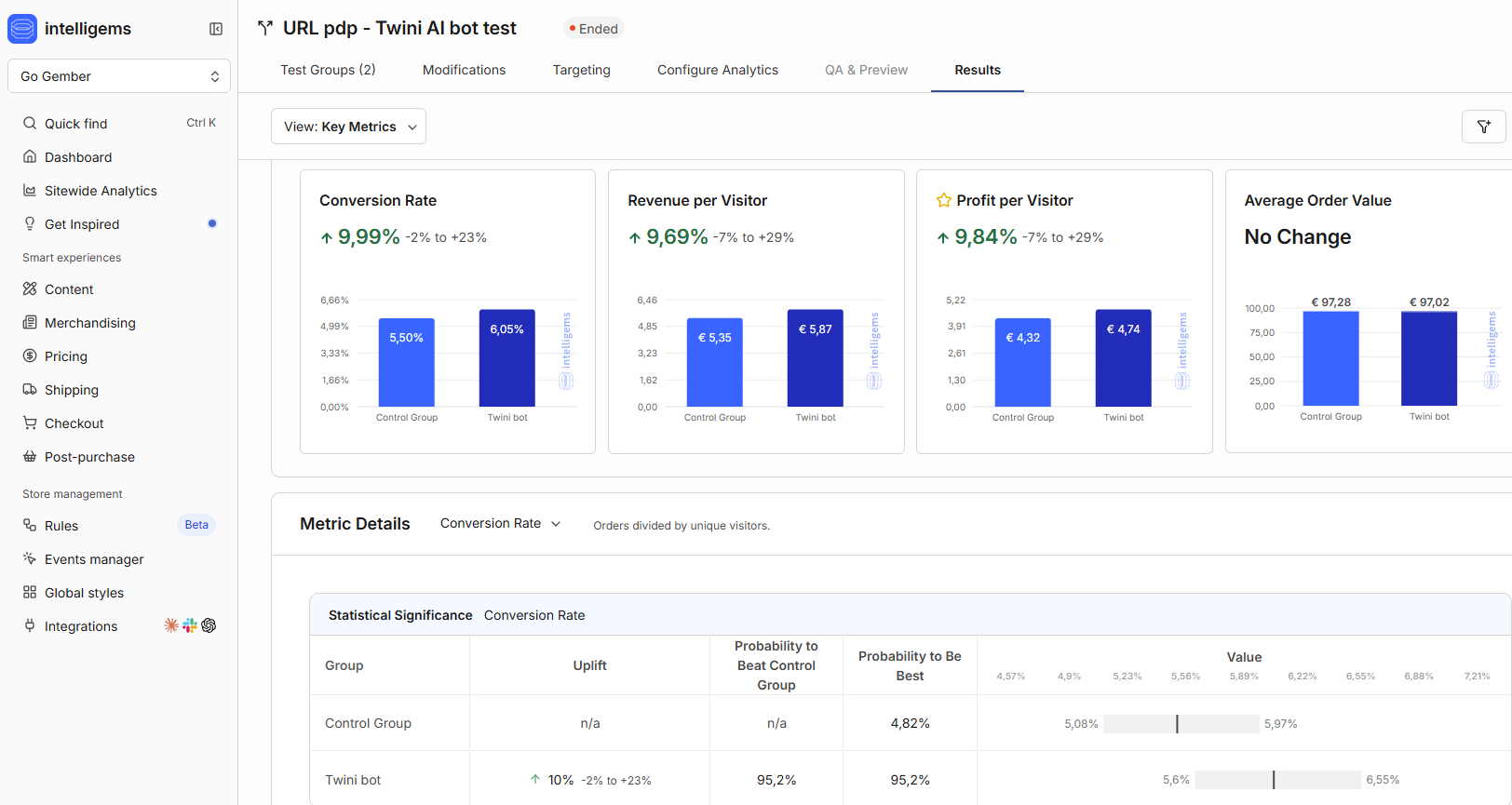
One line stands out: average order value didn’t move, €97.28 against €97.02. The baskets stayed the same size. The whole lift came from more visitors deciding to buy. Twini didn’t upsell anyone. It answered the question that stood between a visitor and a first order.
Alongside the test, the all-time conversation figures: 7,965 chats and 18,406 answers. Shoppers added 2,253 products to their cart from a chat, and 1,385 products sold are attributed to Twini, €131,252 in sales.
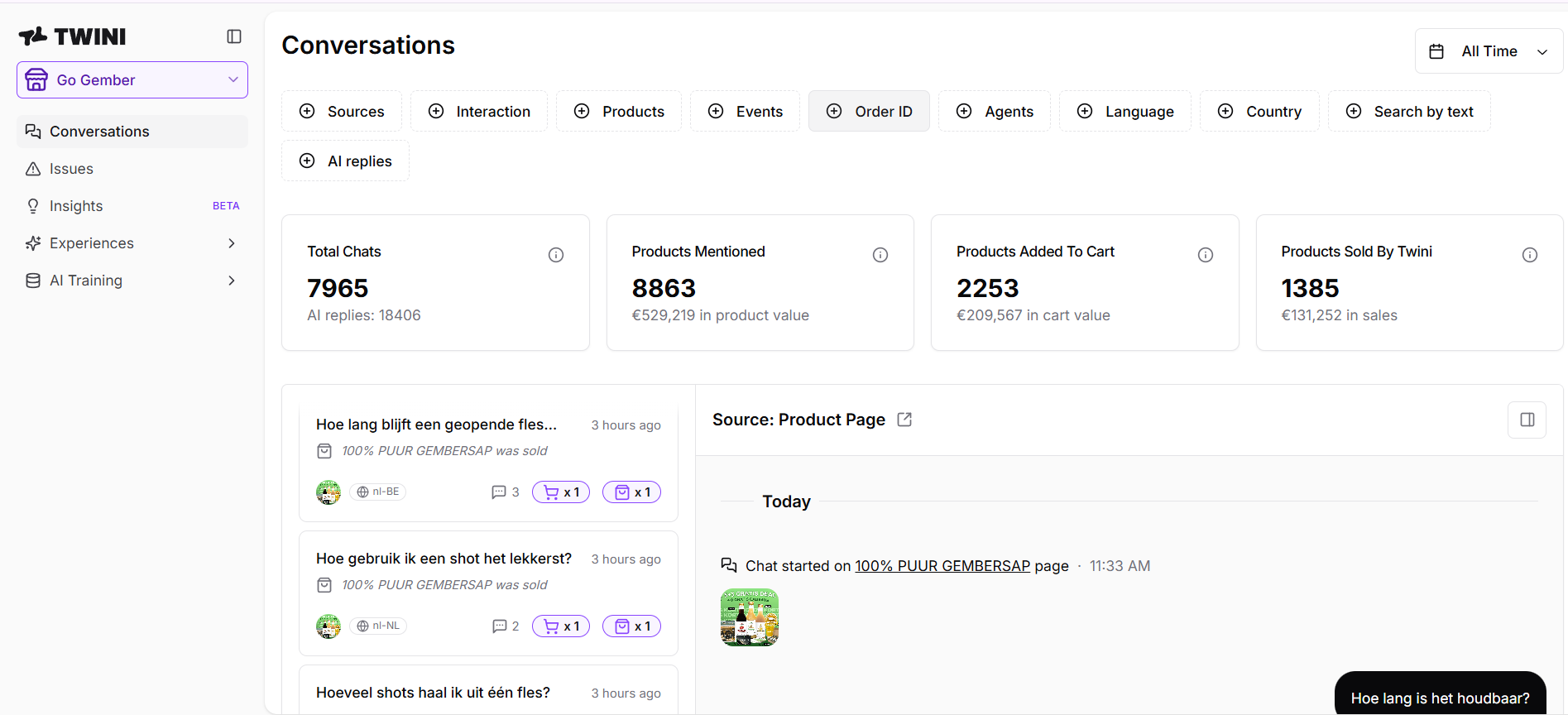
An Intelligems test split product page visitors between Twini and a control, whether or not they used the assistant. Intelligems gives Twini a 95.2% probability of beating the control on conversion rate, with a likely range of −2% to +23% for the lift. The conversation and sales counts are all-time figures attributed to the assistant, not a controlled measurement.
Questions Go Gember didn’t know its customers had.
Go Gember knew its product inside out. What it didn’t know was which questions stopped people from ordering. Twini’s Insights view answers that: it reads every conversation, groups the recurring questions and ranks them by volume. Over a 60-day window it surfaced 14 of them.
The top of the list was a surprise. The most asked question wasn’t about taste or health. It was “what volume or size is this product?”, in 39 conversations. Close behind came “how do I use this product?” (22) and “what are the size and volume options?” (14). Then discounts and coupon codes (10), returns (8), shelf life (5) and ingredients (5).
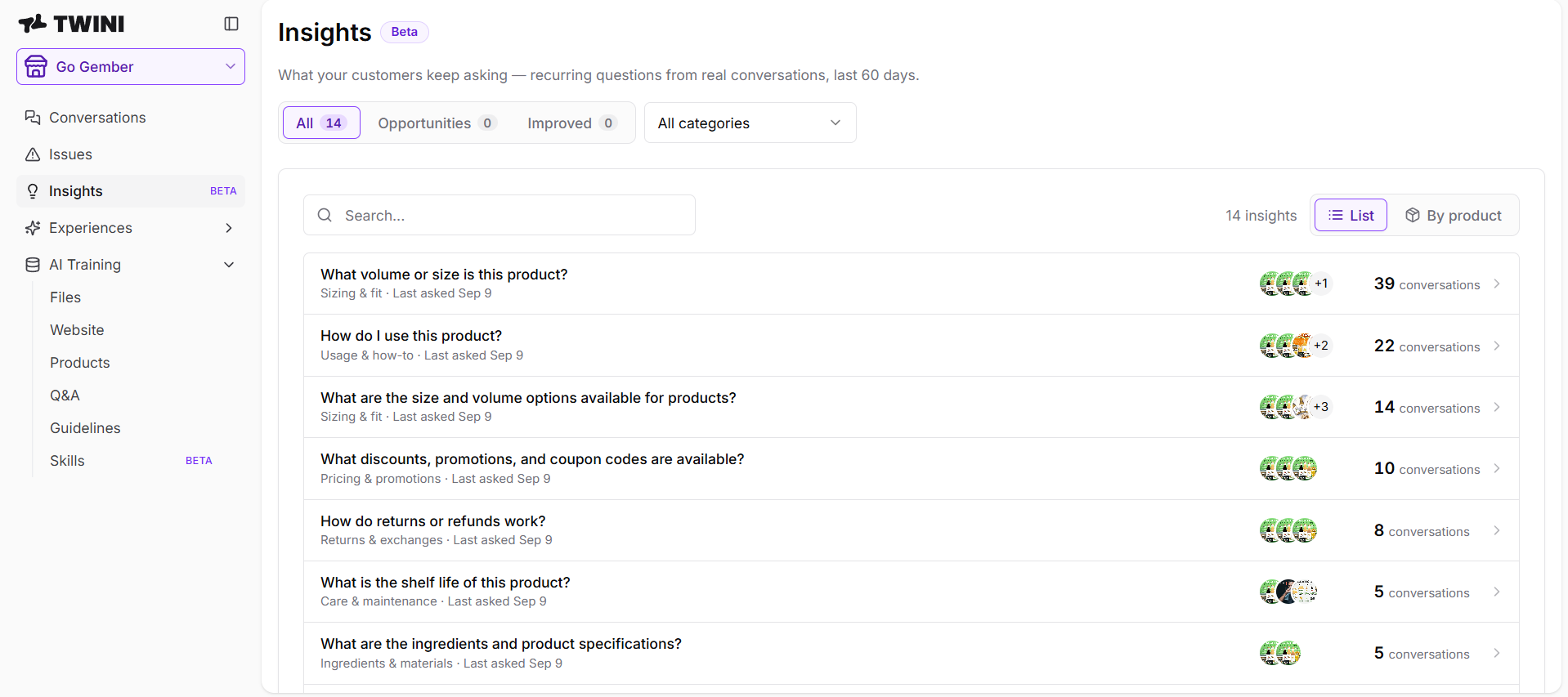
That list is a brief for the team. Two uses stand out:
- Better product page copy. Volume and portions were the number one doubt, yet the page leads with the deal. Putting “one bottle = 12 shots” next to the price answers 53 conversations’ worth of questions before anyone has to ask. The same goes for a short how-to: shot, ginger tea, or in a recipe.
- Meta ads that answer the real objection. Every recurring question is a tested ad angle, written in the customer’s own words. “How do I use it?” becomes a 10-second video of a shot turning into ginger tea. “How long does a bottle last?” becomes “12 shots, 3 weeks in the fridge, under €1 a shot.” Ads built on what people ask, rather than what the brand assumes they care about.
None of these questions came from a survey or a brainstorm. Shoppers typed them, one conversation at a time, and Twini counted them.