A pre-trip purchase, decided by practical doubts
Nobody wants to discover at the gate that their carry-on doesn’t fit. Luggage is bought before a trip, against hard constraints, and ONYX shoppers arrive with precise questions, in Dutch, German, French and English:
- How much fits inside?
- Will this carry-on fit airline cabin requirements?
- What are the exact dimensions and weight?
- Which size should I choose for my trip?
- How do these models compare?
- What does the lifetime warranty cover?
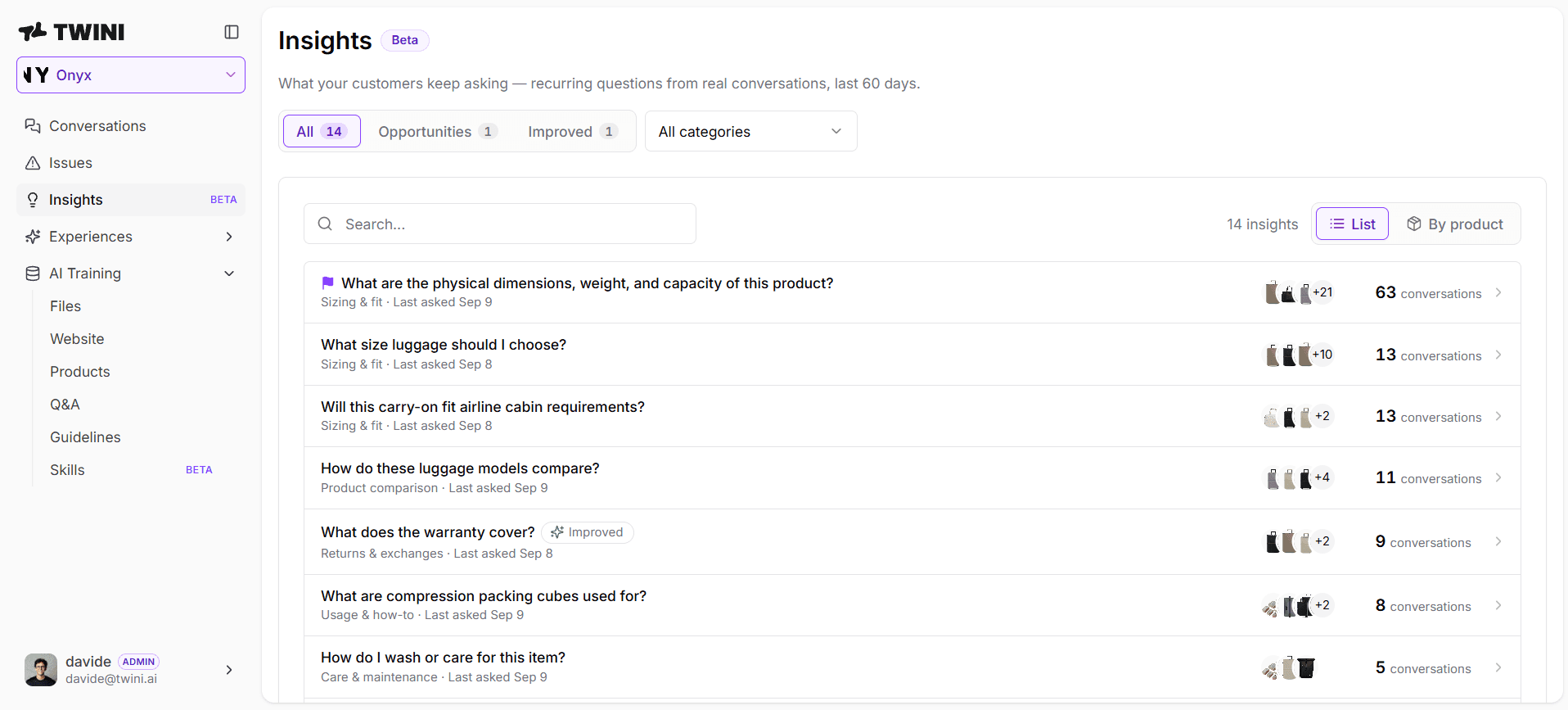
One question stands out: “what are the dimensions, weight and capacity?” came up in 63 conversations on its own. On a €200+ purchase, the shopper who doesn’t get that answer doesn’t guess. They leave.
An assistant trained on the catalogue, and on ONYX’s own pages
So ONYX put Twini on every product page, with a chatbar on the home page too: an AI assistant that answers in the shopper’s language, exactly when the doubt appears.
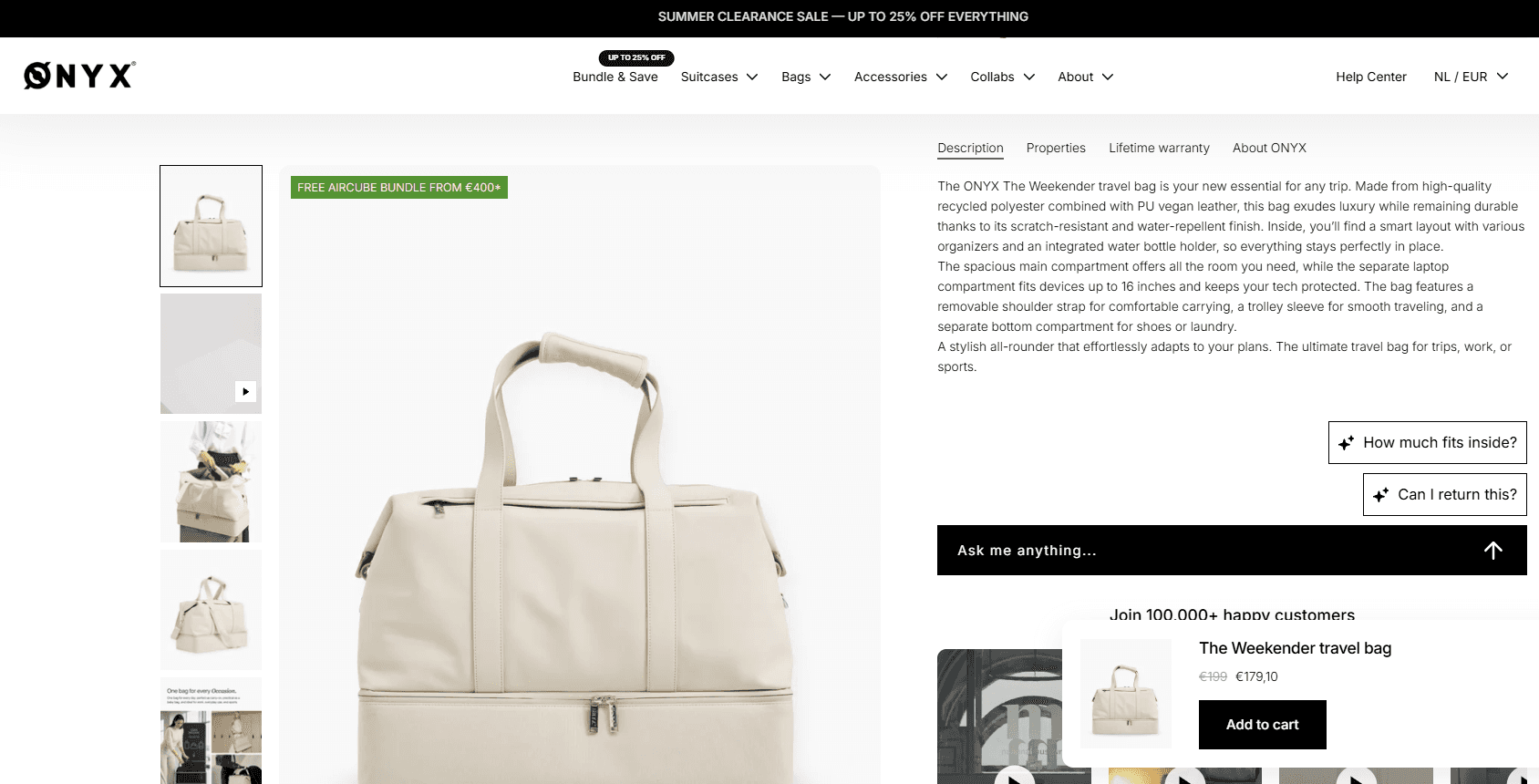
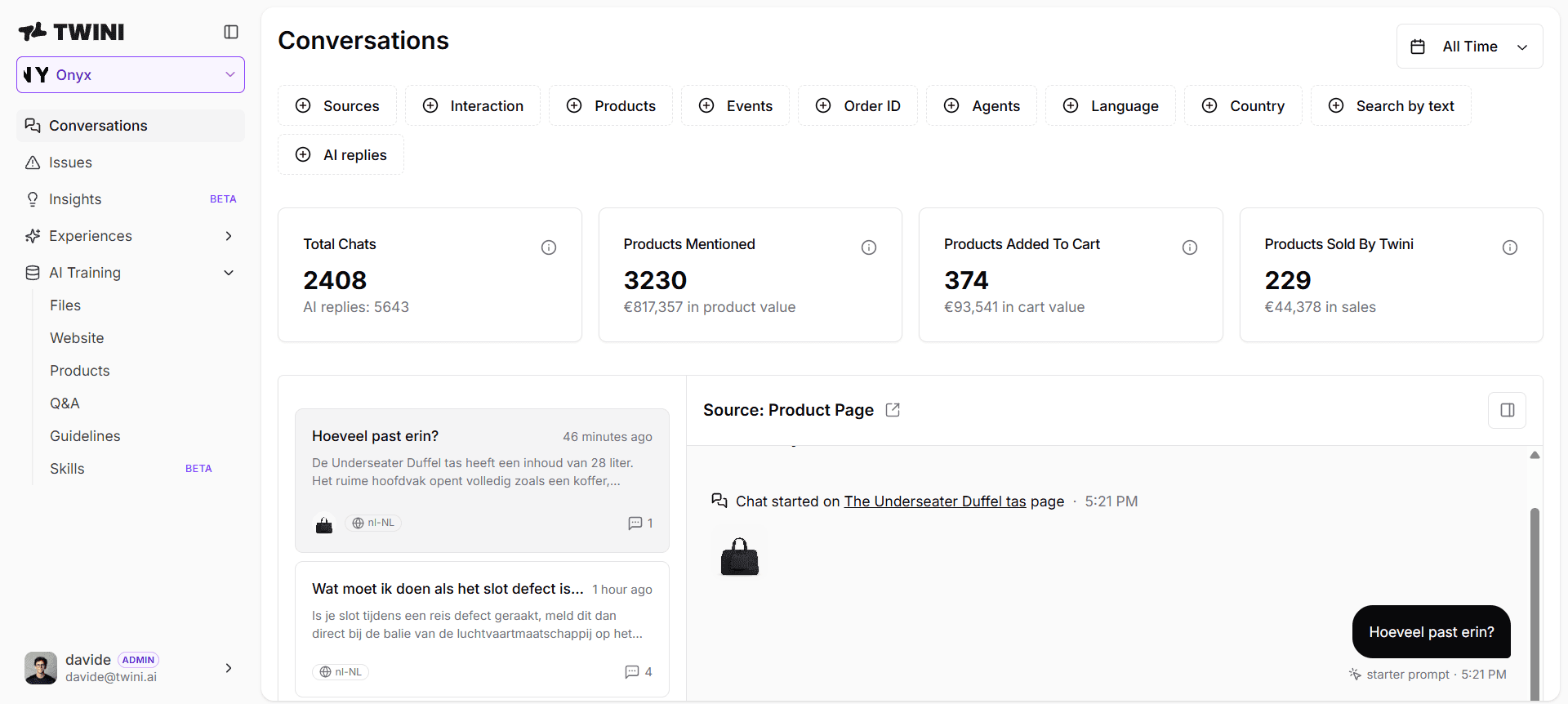
Ask “hoeveel past erin?” on the Underseater Duffel and it answers from the specs: 28 litres, a main compartment that opens fully like a suitcase. Ask what to do about a lock that broke during a trip and it tells you exactly where to start, at the airline desk, before you even think about a claim. It compares models, checks cabin rules and recommends the right size for the trip.
The answers come from the source. Beyond the live catalogue, Twini is trained on ONYX’s own pages: returns, the complaints procedure, quality and design, the brand’s story. So the same assistant that sells the suitcase also handles the after-sale questions, in four languages, across ONYX’s fifteen markets.
Measured against a control group, not just the people who chatted
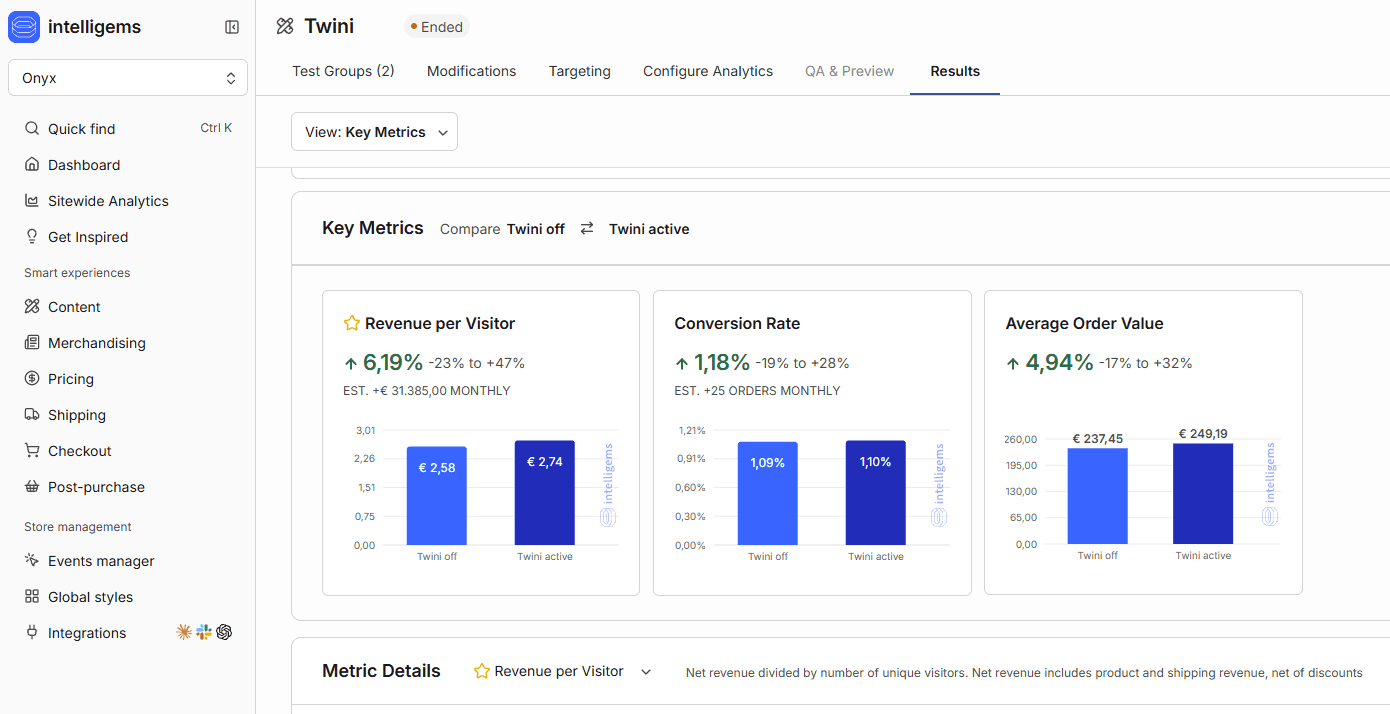
ONYX ran a controlled A/B test in Intelligems, Twini off against Twini active, across the whole store. Everyone counted, including visitors who never opened the chat. Against the control group:
- Revenue per visitor: +6.19%, from €2.58 to €2.74
- Average order value: +4.94%, from €237.45 to €249.19
- Conversion rate: +1.18%, around 25 extra orders a month by Intelligems’ estimate
Behind the store-wide lift, the conversations: 2,408 chats, 5,643 answers, products recommended 3,230 times. Shoppers added 374 products to their cart from a chat, 15% of all conversations, and 229 were sold directly through Twini. On a store where the average order is €240, certainty converts.
“We sell trips people look forward to, so doubts are expensive. Twini answers them before they turn into abandoned carts, and the A/B test showed it in black and white: more revenue per visitor, bigger orders.”
Martijn VerseveldtUX at ONYX
Intelligems split visitors across the whole store between Twini off and Twini active. Everyone counted, including visitors who never opened the chat.
A loop that’s already running
Every conversation feeds two live views, and at ONYX the loop is visibly turning.
Insights groups what customers keep asking: 14 recurring questions, led by dimensions, weight and capacity (63 conversations), airline cabin rules and model comparisons. One of them, “what does the warranty cover?”, has already been answered on the site and carries an Improved badge: asked, fixed, verified.
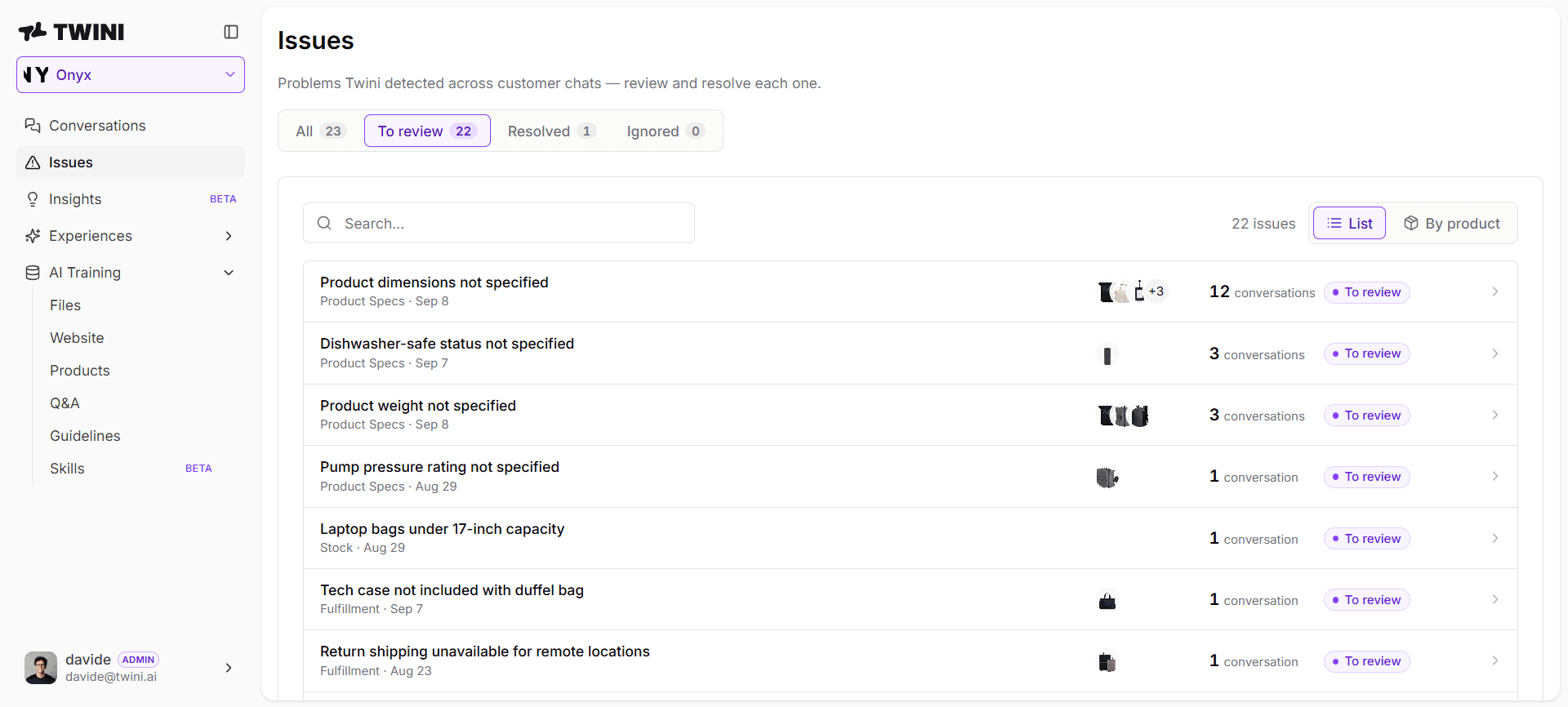
Issues flags what the pages don’t cover yet: product dimensions not specified came up for 12 shoppers, then dishwasher-safe status, product weight, even return shipping for remote locations. Each one is a concrete fix with the demand counted next to it, and one is already marked Resolved.
The store gets sharper every week Twini runs, and every fix makes the next conversation shorter.